Grand Central Takeover: A Multi-Channel Campaign for Vivitrol® Awareness
Vivitrol® is a game-changer in the addiction treatment world—a medication designed to help people tackle opioid and alcohol dependence. But even the best-kept secret needs a megaphone, and that’s where an enormous Out of Home campaign came in. The mission was to take over one of the busiest train stations in the world and make Vivitrol® impossible to ignore.
Year
2015
Client
Vivitrol®
Role
Graphic Designer
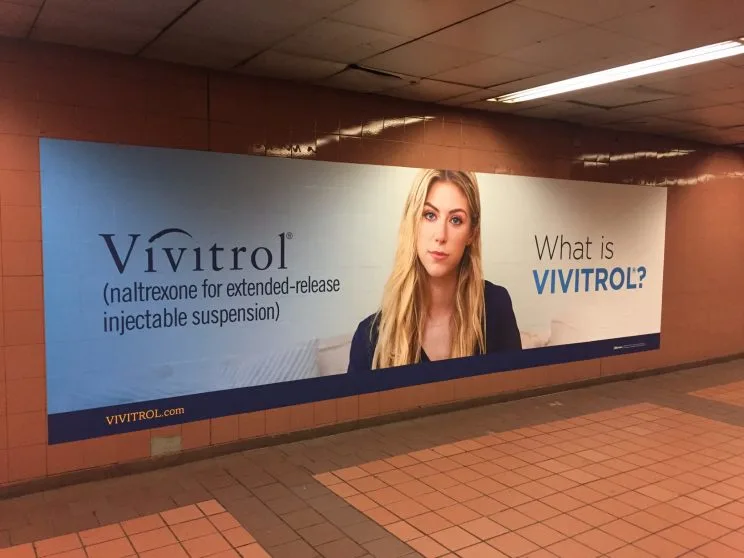
Vivitrol® had serious clinical credibility, but public awareness? Pretty low. Even healthcare professionals weren’t shouting it from the rooftops. The challenge was going to be how they could elevate the brand, reach both patients and prescribers, and do it in a space where everyone—commuters, tourists, coffee-drinkers—was moving at warp speed.
How do you capture attention in a human pinball machine?
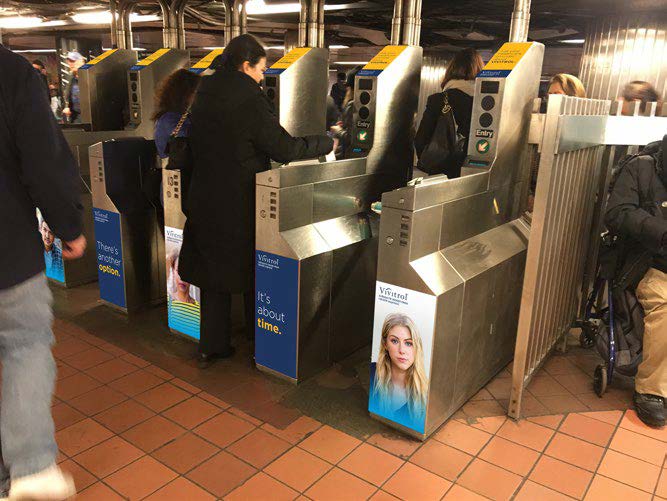
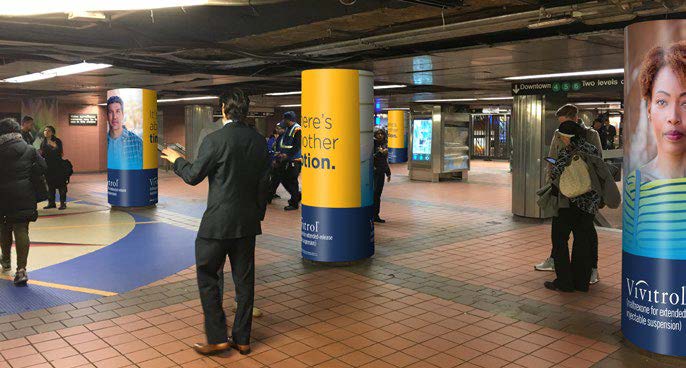
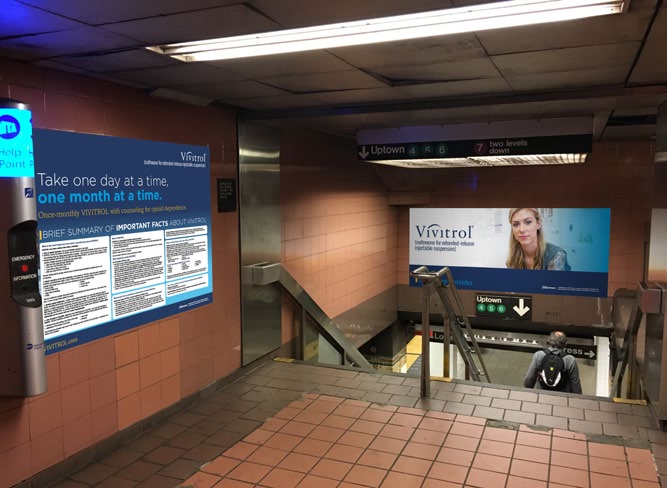
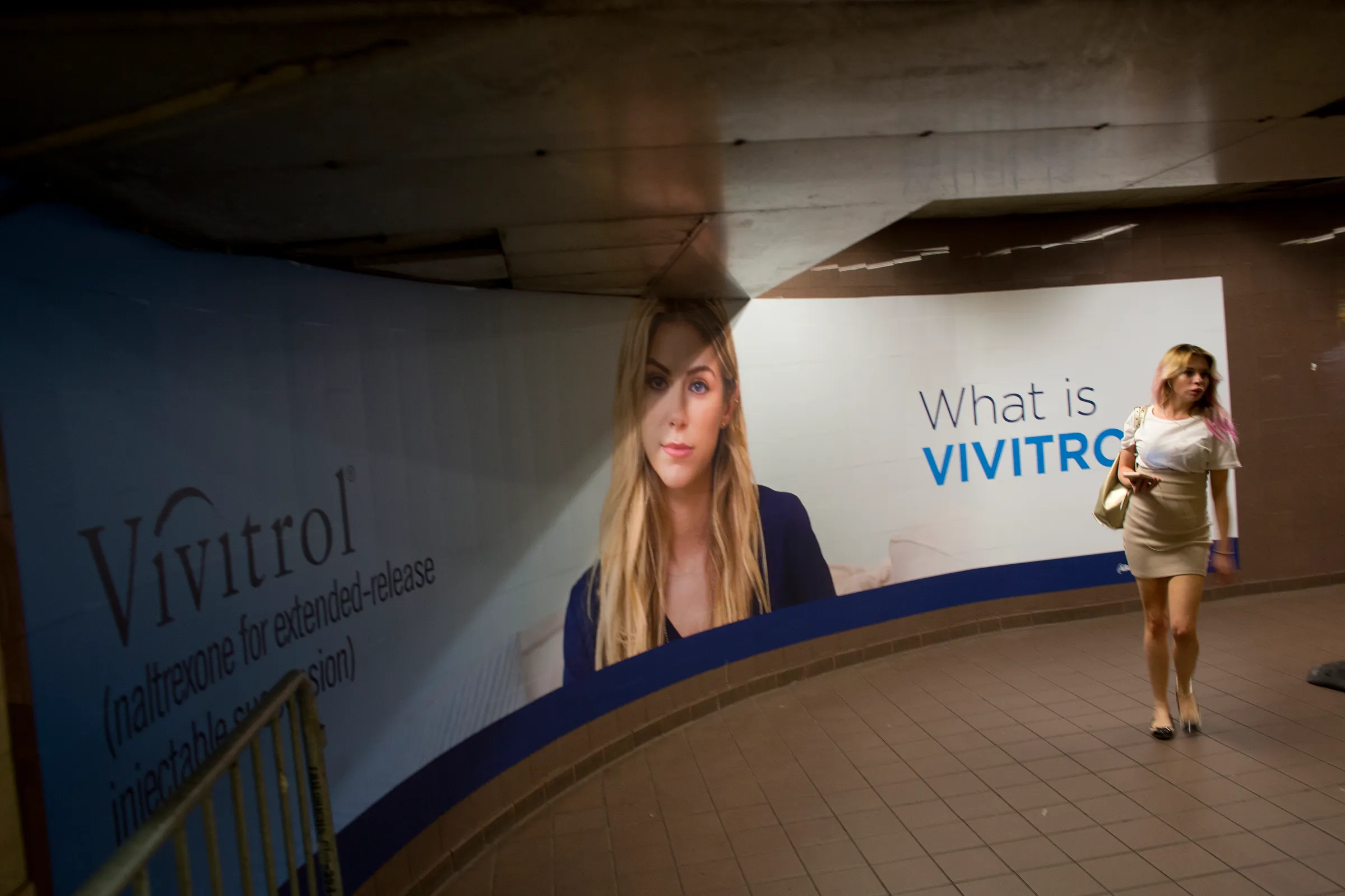
UX skills meet mega OOH Campaign skills.
This project was the ultimate playground for a designer who loves to switch gears across mediums. I was at the intersection of strategy, UX, and visual storytelling—taking the campaign from digital screens to stair steppers and from banners to magazine inserts without missing a beat.
Let's break that down a little more:
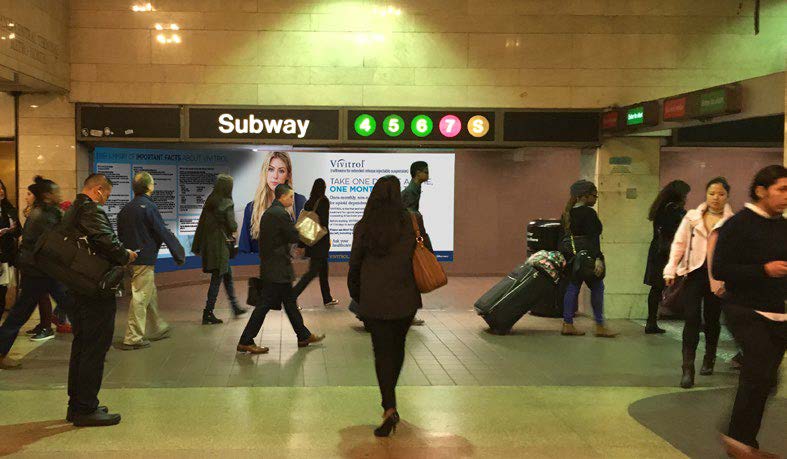
Digital OOH & HTML5 Ads: Designed animated and static ads for massive digital screens and kiosks. This meant crafting visuals that could grab attention in under three seconds and communicate the message instantly—UX principles applied in real life. It also took the same ads and applied them to advertising networks like Google Ad Campaigns.
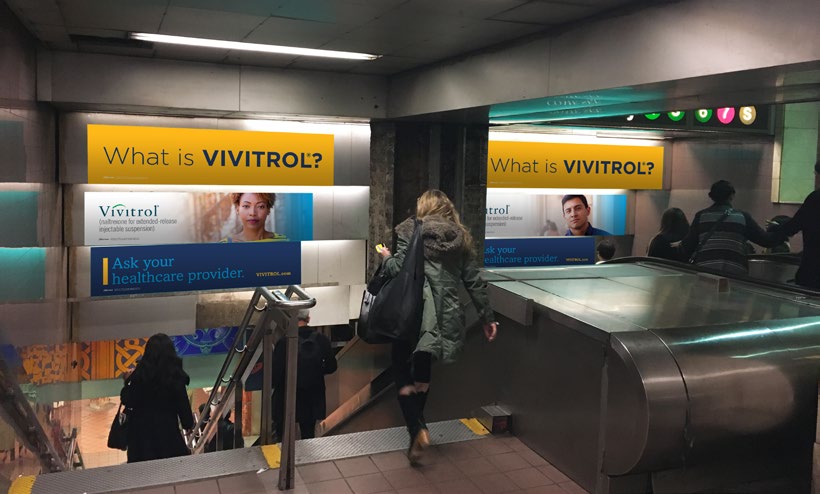
Print & Physical Ads: Switched to tangible design, creating large-scale banners, floor graphics, column wraps, and MetroCard machine graphics. Every poster and floor decal was treated as companion to the digital footprint of the campaign—guiding the eye, telling a story, and leaving an impression.
Cross-Channel Consistency: I made sure that the digital, physical, and print executions felt like a single, cohesive brand experience. That’s design systems thinking in action—just beyond the screen.
Magazine Inserts: Adapted messaging for long-form print while keeping the tone approachable and impactful. This was a chance to flex editorial design skills and maintain engagement over multiple pages.
Switching between mediums wasn’t just fun—it was critical. Each channel had its own constraints, audience behaviors, and interaction patterns. The ability to move from pixels to print to physical touchpoints seamlessly is exactly the kind of UX/visual hybrid problem I thrive on.
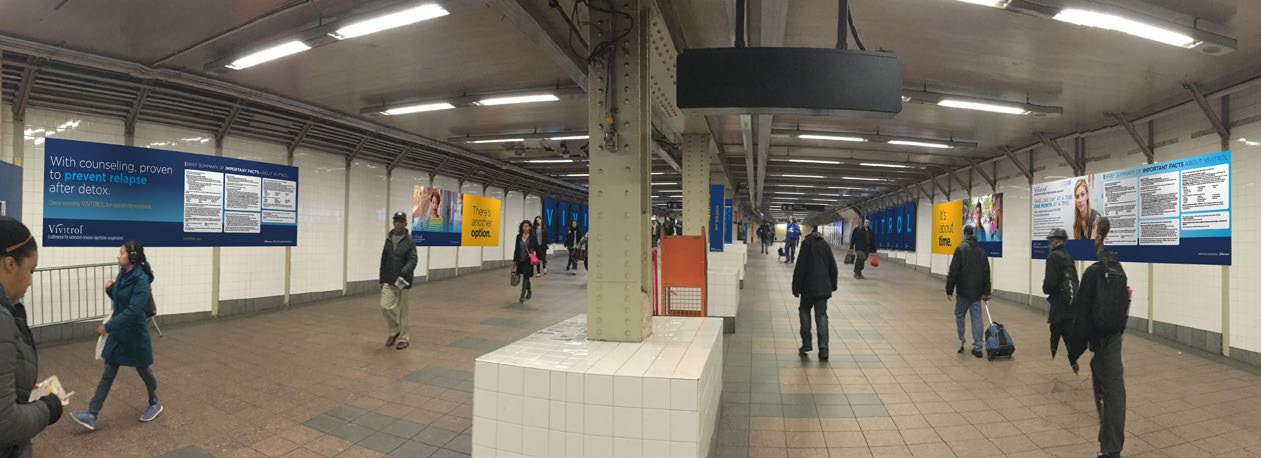
Millions of eyes, one big impact
Grand Central Station isn’t just any station—around July 2017, it saw roughly 750,000 people passing through each day. That’s a lot of eyeballs, foot traffic, and caffeine-fueled attention spans.
The takeaway? By applying graphic design & user experience design—I helped turn Grand Central into a human interface for Vivitrol®.
Daily Impressions: ~750,000 commuters & tourists
OOH Coverage: Static/digital banners, floor graphics, screens, column wraps
Cross-Medium Reach: Digital screens + print inserts = NYC-wide awareness
Engagement Impact: Dramatic increase in brand visibility, recognition, and patient referrals
The takeaway? By applying UX thinking beyond the screen—through movement, placement, and context—I helped turn Grand Central into a human interface for Vivitrol®.